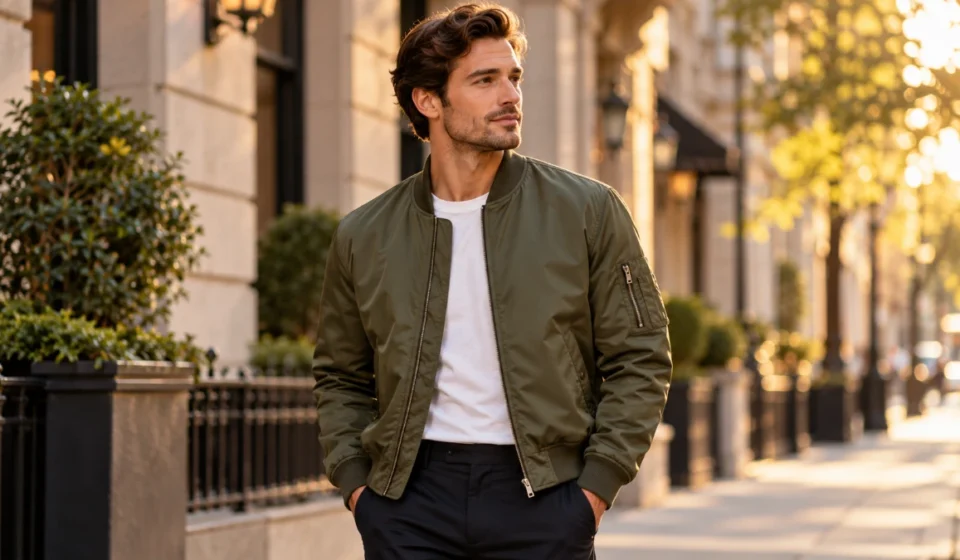

A bomber jacket is a short outer layer typically finished with a close-fitting hem and cuffs. It can be a light layer for a mild day, a lined jacket for cooler weather, or a statement piece that changes a simple outfit. The right one depends less on a trend than on when you will wear it, how it fits over your usual clothes, and whether it works with what you already own. This guide walks you through those decisions, then gives you a practical check to use in a store or while shopping online.
What Is a Bomber Jacket?
Most bombers have a relatively short body, a gathered or fitted hem, close-fitting cuffs, and a zip front. Those details give the jacket its recognizable shape: some fullness through the body, controlled at the waist and wrists. Modern versions vary widely. One might be a lightweight nylon layer with a ribbed collar; another might use wool, leather, cotton, or satin with minimal detailing.
That variety matters when shopping. A product can look like a classic bomber without providing the warmth, weather protection, or easy care you expect. Judge the particular jacket, not just the name on its listing.
Where the Style Came From—and What Changed
The style is associated with military flight jackets designed for practical movement and protection in aircraft. Over time, its short, wearable shape moved into civilian wardrobes. Today, “bomber” describes a family of fashion jackets rather than one exact military specification. You can enjoy the familiar silhouette without looking for flight-jacket details you may never use.
Read more: Bomber Jacket Guide
Bomber Jacket vs. Varsity Jacket vs. Blouson
Retailers sometimes use these names loosely, and the shapes can overlap. Look at the details rather than relying on the category label.
| Style | Typical features | Overall look | Consider it if you want… |
| Bomber | Short body, fitted hem and cuffs, often a zip front | Clean casual shape that varies by fabric | A versatile outer layer |
| Varsity jacket | Athletic cues such as striped ribbing, lettering, or contrasting sleeves | Sportier, collegiate feel | A jacket that makes the outfit’s theme clear |
| Blouson | Broad term for a short jacket gathered or fitted at the waist | Can look more tailored or understated | A similar shape with fewer flight-jacket cues |
A plain blouson may be the better choice for dressier outfits. A varsity jacket works when you want its athletic details to stand out. Neither distinction is absolute, so compare the actual garment.
Which Bomber Jacket Is Right for You?
Make three decisions in order: where you will wear it, what construction suits that use, and whether it fits your wardrobe. This is more reliable than starting with a colour you like in a product photo.
Step 1 — Choose by Weather and Intended Use
Think of your most common outing. For a mild fall commute, a light shell over a T-shirt or thin sweater may be enough. For colder evenings, look at the lining, insulation, room for layers, and whether the collar and cuffs keep drafts out. A jacket meant mainly for dinner or an indoor event can prioritize appearance and comfort over weather features.
Do not infer warmth from “wool” or rain protection from “nylon” alone. Fabric weight, lining, construction, and any stated water-resistant treatment affect how a specific jacket performs. Water-resistant does not mean waterproof. If you need dependable protection in heavy rain, check the maker’s stated capabilities and consider a dedicated rain jacket.
Step 2 — Compare Fabrics and Construction
Use this table to narrow your search, then inspect the details of the jacket you are considering.
| Material or finish | Often chosen for | Verify before buying |
| Lightweight nylon or polyester | Casual layering and a smooth outer surface | Lining, breathability, and any stated water resistance |
| Cotton | A softer, less shiny everyday look | Fabric weight, care directions, and shrinkage guidance |
| Wool blend | Texture and a somewhat dressier appearance | Fiber composition, lining, and cleaning requirements |
| Leather or suede | A distinctive look and feel | Material description, care needs, and return policy |
| Satin finish | An outfit with more colour or sheen | Care instructions and how easily the surface may snag |
Two cotton jackets may feel completely different if one is thin and unlined and the other is dense and quilted. When shopping online, read the full materials and lining details. If a listing does not tell you what you need to know for your climate, ask the seller before ordering.

Choose a Colour and Shape You Will Actually Wear
Start with the pants and shoes you reach for most. A simple black jacket might work with black trousers, blue jeans, and white sneakers. Navy, olive, and brown can also be flexible, depending on the colours already in your closet. A bright satin finish or large embroidery can look excellent, but it asks the rest of the outfit to cooperate.
Try the three-outfit check before buying:
- Name one outfit for an ordinary day.
- Name one for a different setting, such as dinner or travel.
- Name one using shoes and pants you already own but rarely wear together.
If you struggle to make more than one outfit, decide whether you want an occasionalwhether piece. That is a valid purchase, but it is different from buying an everyday jacket.
How Should a Bomber Jacket Fit?
A traditional shape may be roomy through the body and closer at the waist. A modern oversized version may have dropped shoulders and extra width by design. Neither has to fit tightly. What matters is whether the jacket moves comfortably and whether its proportions work with your intended outfit.
Check the Shoulders, Sleeves, and Hem
With your arms relaxed, look at where the shoulders fall. A neat cut should sit naturally without pulling across your upper back. A dropped shoulder can be intentional, but the sleeves should still let you reach forward comfortably. Check that the cuffs stay near your wrists without gripping them too tightly.
Zip the jacket and look at the hem from the front and side. Many bombers finish around the waist or upper hip, but the best position depends on the design, your torso, and the rise of your pants. If the hem bunches above your waistband or rides up every time you move, try another size or cut. If a roomy jacket overwhelms your frame, changing its length or pairing it with different pants may help more than simply sizing down.
Do the Five-Minute Try-On Test
Wear the layer you would normally put underneath, then:
- Zip the jacket fully without forcing the front together.
- Raise both arms and reach forward as though picking something up.
- Sit down and check whether the hem or collar becomes uncomfortable.
- Put your hands in the pockets to see whether they sit where you expect.
- Check for pinching cuffs, restricted shoulders, or excessive bunching.
- Take quick front and side photos in a natural stance.
For an online order, compare the seller’s garment measurements with a jacket you already like. Lay your jacket flat and measure it the same way the seller does. Your body’s chest measurement is not the same as a jacket’s chest measurement; the garment needs extra room for movement and the layers underneath.
How to Style a Bomber Jacket
The short hem draws attention to the meeting point between jacket and pants or skirt. That makes proportion more useful than any strict outfit rule. If the jacket is full and striking, simpler pieces underneath often give it room to stand out.
Casual: T-Shirt, Jeans, and Sneakers
For an easy everyday outfit, try an olive or navy jacket over a plain white or gray T-shirt with straight-leg jeans and clean sneakers. The simple top keeps the jacket’s shape visible, while straight or relaxed jeans balance a fuller upper half.
For a colourful or embroidered version, keep the shirt and pants quieter. For example, a bright satin jacket over a black tee and dark jeans makes the jacket the focal point without needing matching accessories.
Smart Casual: Simple Jacket and Tailored Separates
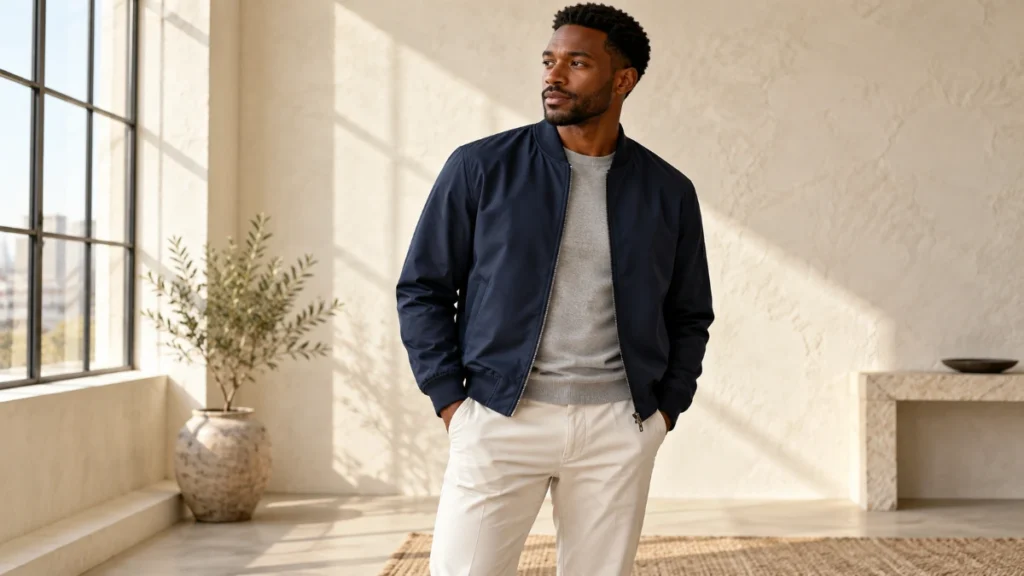
Choose a minimally detailed jacket in a fabric and colour that sit comfortably alongside your trousers. A dark, plain bomber over a fine knit with tailored pants and leather shoes can work for dinner or a relaxed office. A tidy shirt is another option if its collar sits comfortably beneath the jacket.
Check the actual dress code first. Some smart casual settings welcome a refined bomber; an event that specifically requires a blazer still calls for one.
Dresses and Skirts: Balance the Silhouette
A short jacket over a slip dress creates a clear waist break while leaving much of the dress visible.Bomber Jacket Guide Over a long skirt, a neater or slightly cropped jacket can define the upper half without covering the skirt’s shape. For a fitted dress, a roomier bomber adds contrast.
Try the outfit with the jacket both open and zipped. A gathered hem can change where the fabric sits, so the best combination may look different from a product photo taken with the jacket open.
Layering Without Excess Bulk
A T-shirt needs little extra space. A lightweight knit adds warmth while usually preserving the jacket’s outline. A hoodie adds fabric at the shoulders, chest, and neckline, so try it underneath before assuming your usual jacket size will work.
If the sleeves twist or the front pulls when you add the layer, consider a roomier cut. Buying a much larger size solely to fit a thick hoodie can leave the jacket awkward when worn over a T-shirt; decide which outfit you will wear more often.
The Bomber Jacket Buying Checklist Competitors Leave Out
A flattering photo tells you little about daily comfort. Use the same short inspection for every jacket on your shortlist, whether you are holding it in a store or reading an online listing.
Inspect the Details That Affect Everyday Use
In a store, run the zip up and down several times. Check that it engages easily and does not catch the lining. Look at the seams, especially around the armholes and pockets, and gently stretch the cuffs and hem to see whether they return to shape. Put your phone or keys in a pocket if you intend to use it that way.
These checks cannot guarantee how long a jacket will last. They can reveal immediate annoyances, such as a scratchy lining, a pocket too small for your phone, or a zip you have to fight every morning.
Read an Online Listing Without Guessing
Before placing an order, find:
- Garment measurements and how they were taken
- Shell, lining, and insulation details
- Care instructions
- Model measurements or sizing notes, if provided
- Customer photos showing the jacket zipped and open
- Shipping charges and return conditions
If you need the jacket for wet or cold weather, look for a specific product description of those features. An appealing photograph and a broad fabric label are not enough to establish performance. Save a screenshot of the size chart you used, since listings can change.
Decide Whether It Is Worth the Price
Consider how often you will wear it, whether it works with your existing clothes, how much care it needs, and whether returning a poor fit will cost you money. A simple cost-per-wear calculation can clarify your own expectations:
Hypothetical example: A $120 jacket worn 60 times costs $2 per wear, before cleaning or repair costs.
That figure does not prove a $120 jacket is better than a $70 one. It helps you compare a piece you expect to wear weekly with one you may reach for only twice a season.
Common Mistakes to Avoid
- Choosing by the model photo alone: Compare garment measurements with a jacket you own.
- Assuming water resistance means waterproofing: Read the stated protection and intended use.
- Trying it on over the wrong layer: Wear the sweater or hoodie you plan to use.
- Ignoring care requirements: A jacket that needs more upkeep than you will give it may not be a good everyday choice.
- Buying a statement colour without an outfit: Complete the three-outfit check first.
For a quick decision, write down your main use, mark fit, zip, cuffs, pockets, and care label as checked, and list three outfits you can make now. If a crucial box remains blank, keep comparing.
How to Care for and Store Your Jacket
Start with the sewn-in care label. Jackets that share a silhouette can contain very different shells, linings, trims, and insulation. The instructions for your particular garment matter more than a general cleaning tip.
Cleaning Depends on the Material and Trim
Check both the outer fabric and any leather trim, embroidery, padding, or delicate lining before washing. Some cotton or synthetic jackets may have machine-wash instructions; a wool blend, leather, suede, or delicate satin piece may require a different approach. Follow the label’s temperature, drying, and professional-cleaning directions. If the label is missing, ask the manufacturer or a qualified cleaner rather than testing a full wash on an expensive piece.
Store It So the Shape Holds Up
Empty the pockets, allow the jacket to dry completely after rain or heavy wear, and avoid crushing it in a crowded closet. Use a suitable hanger for a lighter piece; give a heavier jacket enough support so it does not stretch out of shape. Before storing it for a season, check that it is clean and fully dry.
Frequently Asked Questions
I’d have serious questions regarding what makes a jacket, well…a bomber jacket?
A short often fitted coat would be fitted or gathered at the hem and cuffs, usually fastened with a zipper. The body may be a little fuller even above the hem. Also, because the fabrics and collars and pockets can differ, the main trick is in holding an expectation that not all bombers are going to carry a singular exact set of details.
In short, the main difference between a bomber jacket and a varsity jacket is the length of their sleeves.
This could be just a varsity jacket, since it includes athletic features like striped ribbing, letters or contrasting sleeves. A bomber, on the other hand — which originated from styling akin to that of a flight jacket; it can be much simpler. The shapes overlap, and retailers can use the names rather liberally; so check out the jacket itself instead of just going by its label.
How fitted should a bomber jacket be?
It is ideal if you can move in comfort over the clothes that you plan to wear underneath. A clean fit can be snug against the body, while an oversized style intentionally carries added volume. Both have to be able to slide over the shoulders, they must not pinch at the cuffs and the zip should still work.
Where should a bomber jacket sit?
Most finish at the waist or upper hip, although contemporary cuts differ. Stand up, sit down, lift your arms and judge the hem. Should conform with the rise of your pants or fit into the shape of that dress without climbing up (or down) and bunching where it is not supposed to be.
Wearing a hoodie under a bomber jacket?
Yes, if there is ample room in the shoulder, chest and neckline. Wear the matching two together under zipped jacket Shirt One jacket cut is to wear a proper hoodie underneath, that will make it tight if it’s thick -but get something light on and you should need no different size for the jacket
What bomber shirt material is better for chilly climate?
A lightweight cotton or synthetic jacket could be fine for a mild-weather coat, but it will depend on the weight and lining. Select by the climactic situations you most regularly see as often as possible and how warm you generally are inclined to get. Look for the product details: jackets named with the same material can have significantly lower performance.
However, that brings us to the all-important conversation of whether or not a bomber jacket is warm enough for winter.
An insulated version might work on some days in the winter, but an unlined light one is often for a very different purpose. Both warmth and weather resistance depends on the materials used, lining, wind exposure, room for layering and the local climate. If you’re planning to spend a lot or most of the day in extreme cold, it’s important to judge the individual jacket’s construction instead of simply relying on the fact that it is winter coat style
Does a bomber jacket work for a smart casual dress code?
And in many more relaxed smart casual situations, a simple plain version, if it fits well, will work with a knit or shirt and tailored trousers and appropriate shoes. Something shiny, large patches and thick cuts usually come across more casual. Listen to the instructions provided, if they for an invitation/ work place are to wear a blazer then do so.
First up how easy is it to style a Colour Bomber jacket?
The simplest colour is the one that goes well with your regular clothing. Most people stick with black, navy, olive and brown to start out but again that’s up to your closet. Before buying a jacket, lay it down next to three of your favorite outfits; one that works with all or most of those colors will serve you better than an allegedly universal choice.
How do you wash a bomber jacket without destroying it?
Read its stitched-in care label and look for trimming or lining that might require a different method of cleaning. Always follow the washing and drying directions specific to the garment. It should come as no surprise that a machine wash is out of the question just because another jacket that shares its silhouette survived it! If directions have not been given or it isn’t clear, reach out to the maker or a cleaner.