
However, if you are a household that consumes many of the staples with space to spare and can get yourself to one of their drop locations in reasonable distance then definitely check out Azure Standard. A more or less straightforward question of how much this crap you want to pickup ultimately costs and just how much the cost may even go up in addition to what each pick is worth after you pick it.
There is another Remember to some food The other Food are food, on the actuate site, organizer and outlet Local pickup point for the area where they live, called drops where consumers can also choose to be collected in addition to home delivery Product, if eligible. Drop Locator for 4. Cook a small amount of time before cooking for long.
We’ll guide you through how and give you a formula to get the crew at yours counting. Here are worked pricing examples below based in doing working maths, not on a quote from Retailer. Last validated invoice data — Confirm your final price for the order on Oct 6 2023.
What Is Azure Standard, and How Does It Work?
The family runs businesses involved in distributing natural and organic foods, as well as sustainable household and garden goods. You choose, pay for your order on your own, even when it´s delivered together with the truck of your neighbours purchase. Never mind sharing shopping lists, or co-ordinating delivery times with other shoppers.
What You Can Buy
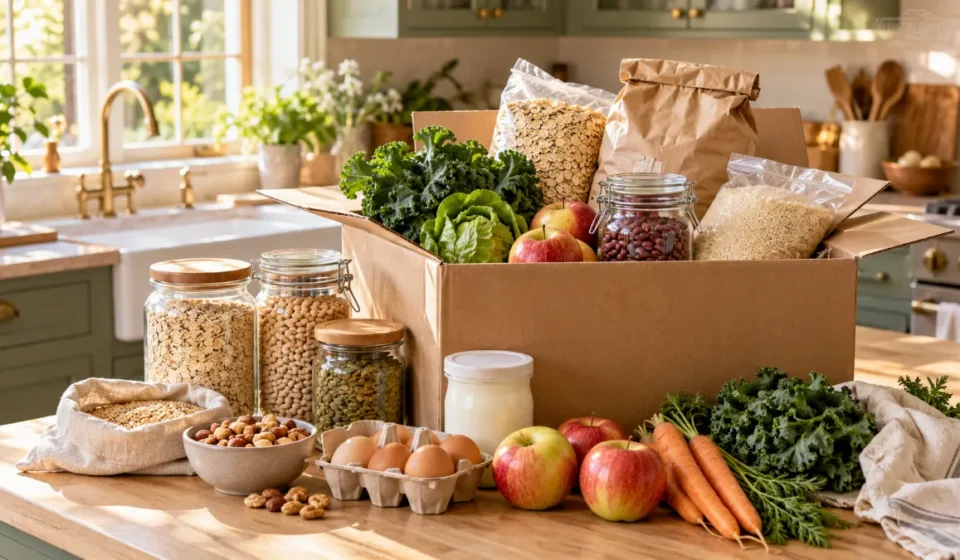
The catalog includes flour, oats, rice, dried beans, oils, spices, produce, dairy, frozen groceries, cleaning supplies, gardening products, and animal feed. Package choices vary: a product might come in an individual bag, a larger bulk bag, or a case containing several smaller packages.
Check the quantity carefully. A case of six one-pound bags and one six-pound bag contain the same amount, but they create different storage and sharing options.
Read each listing’s ingredients, allergen information, certification status, and storage instructions. The retailer carries both certified organic and non-certified products; “natural” or “non-GMO” does not establish organic certification. Its product listings include a certification field you can check.
How Community Drop Delivery Works
A drop is a location where customers meet a delivery truck. The coordinator helps organize the local pickup and communicate instructions. The cutoff is the deadline for submitting an order for a particular delivery cycle.
The basic sequence is:
- Create an account and select a drop.
- Submit your order before its cutoff.
- Watch for order and delivery updates.
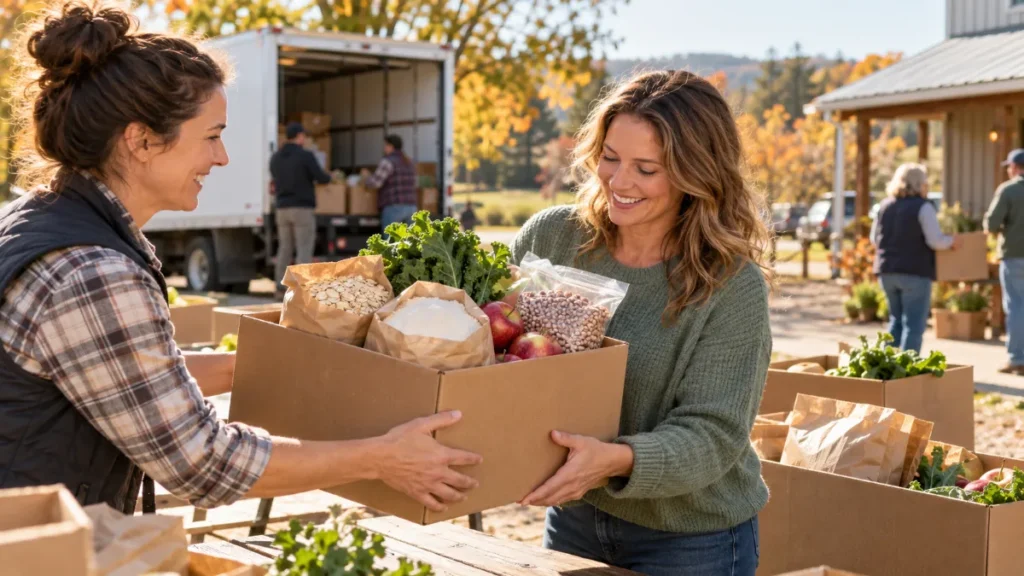
- Meet the truck and collect your labeled packages.
Delivery frequency varies by route and drop. Some routes operate weekly or every two weeks; others run on four-week cycles. Check the local schedule rather than assuming every location delivers monthly.
There is no fee to join. Many eligible products can also travel by UPS or USPS, with separate shipping costs and availability restrictions. See the company’s delivery explanation and official FAQ.
Is This Grocery Service a Good Fit for Your Household?
Before comparing products, determine whether collection and storage are workable. A low price offers little benefit if pickup repeatedly conflicts with work or the food has nowhere to go.
Check Pickup Distance and Schedule Flexibility
Estimate the round-trip distance, then include time for parking, waiting, and collection. A 15-minute drive each way does not necessarily mean a 30-minute pickup trip.
Ask the coordinator how confirmed arrival times and changes are communicated. Also ask whether someone else can collect your order and whether assistance is available for heavy packages. Holding orders requires advance arrangements and is not available at every drop.
If your schedule is inflexible, secure a backup collector before ordering. Do not assume groceries can remain at the pickup location until you finish work.
Consider Storage, Consumption, and Upfront Spending
A frequent bread baker may use a large flour bag steadily. Someone baking once a month may tie up money and shelf space in the same purchase for much longer.
Record how much you normally use over two to four weeks. Check pantry, refrigerator, and freezer capacity, including space needed after opening or portioning.
| Your situation | Main check | Sensible starting point |
| You use staples frequently | Weekly consumption and final unit price | Compare larger packages |
| Storage is limited | Package dimensions and storage requirements | Choose smaller quantities |
| Pickup conflicts with work | Reliable alternative collection | Arrange help before ordering |
| Grocery cash is tight | Upfront payment and remaining weekly needs | Keep the trial order modest |
| You want unfamiliar foods | Taste and intended use | Test a small package first |
A purchase can have a favorable unit price while still being too expensive for this week’s budget. Keep money available for the fresh foods and other essentials you need before the next delivery.
- Read more: Azure Standard
How Much Does an Order Really Cost?
Use the checkout total as the starting point, then add costs specific to collecting and storing your purchase.
Verify Delivery Charges and Order Requirements
The published policies distinguish several charges:
| Charge or requirement | Published policy | What to check |
| Individual order size | No minimum purchase; $5 handling fee for standard truck-route orders under $50 | Your cart and delivery method |
| Route delivery charge | 8.5% applies in specified states and areas | Your selected drop and invoice |
| Payment convenience fee | 3% for credit cards and rewards debit cards; none for ACH or non-rewards debit | Payment choice and checkout disclosure |
| Collective drop minimum | Standard on-route minimum is $550 across the drop’s orders | Local minimum, especially off-route |
| Other carrier charges | Customer is responsible for applicable charges | Parcel, freight, or ocean-carrier quote |
Sources: Pricing and billing and FAQ.
The $550 figure is a collective purchase threshold, not an extra delivery fee or an amount every household must spend. Ask the coordinator whether the group has reached its required total.
Review applicable taxes and any payment fee in the actual checkout. If an 8.5% delivery charge applies, multiplying its applicable base by 0.085 gives the delivery charge; multiplying by 1.085 gives that base plus the charge. Other fees may still apply.
Calculate the Final Cost per Pound or Ounce
Use a consistent unit:
Final unit cost = (product price + allocated order charges) ÷ product quantity
For example, a hypothetical five-pound bag costing $12, with $2 in allocated charges, costs $14 ÷ 5 = $2.80 per pound.
For shared order charges, one simple estimate is to allocate them in proportion to each product’s merchandise price. If an item represents 20% of a $100 basket, allocate 20% of a shared $10 charge to it: $2. Use item-specific charges directly when available; proportional allocation is an estimate, not the retailer’s billing method.
There are 16 ounces in a pound. Compare weight ounces with weight ounces, and fluid ounces with fluid ounces.
Include Travel and Storage Without Double-Counting
Add only the travel cost created by the purchase. If collection fits into an existing trip, count the extra distance rather than the entire journey. For a dedicated pickup, include the full incremental trip.
Separate one-time storage purchases from recurring expenses. A $20 container increases your first order’s cash requirement, but charging the full $20 against every future order exaggerates ongoing costs.
Keep two totals:
- Cash needed now: checkout, pickup expenses, and new supplies.
- Repeat-order cost: purchases and recurring expenses after setup.
Track time separately unless you want to assign it a personal dollar value. Likewise, calculate savings with and without a first-order discount so you know whether the purchase remains attractive later.
Will Bulk Buying Actually Save You Money?
The useful comparison is the cost of food your household will consume. Package size, waste, and collection expenses can change the answer.
Compare Cost per Usable Pound
Effective unit cost = total attributable cost ÷ quantity actually used
Suppose a hypothetical 25-pound purchase costs $50 after allocated charges:
| Amount used | Amount unused | Effective cost per usable pound |
| 25 lb | 0 lb | $2.00 |
| 20 lb | 5 lb | $2.50 |
| 15 lb | 10 lb | $3.33 |
Food still stored in usable condition is inventory, not automatically waste. However, food discarded or left unused indefinitely should not be counted as realized savings.
Calculate How Long a Package Will Last
Weeks of supply = package quantity ÷ average weekly use
A 25-pound bag at two pounds per week supplies about 12.5 weeks. At half a pound per week, it represents 50 weeks of supply.
These figures measure consumption, not safe shelf life. Compare them with the manufacturer’s instructions, storage conditions, and available space. If the quantity exceeds a practical storage period, choose a smaller package or arrange a confirmed split before buying.
Find Your Break-Even Price
Determine what an equivalent amount would cost elsewhere:
Maximum comparable total = expected usable quantity × alternative unit price
If you expect to use 20 pounds and an equivalent local product costs $2.40 per pound, the comparable total is $48. With $8 of attributable delivery and collection expenses, the bulk product would need to cost less than $40 to produce cash savings.
Match product type and certification. Organic rolled oats and conventional instant oatmeal are not interchangeable price comparisons.
Test the Decision With Different Household Scenarios
The following scenarios are hypothetical and include different allocated pickup costs:
| Buyer | Purchased / expected use | Total attributable cost | Effective unit cost | Decision |
| Frequent baker, nearby drop | 25 / 25 lb | $50 | $2.00/lb | Favorable if equivalent local food costs more |
| Small household testing a new food | 25 / 15 lb | $50 | $3.33/lb | Try a smaller package |
| Regular user, long dedicated trip | 25 / 25 lb | $65 | $2.60/lb | Check whether travel removes savings |
| Regular user buying several staples | 25 / 25 lb | $52 | $2.08/lb | Shared trip costs may improve value |
Combine purchases only when you need them. Adding unwanted goods to spread travel costs or avoid a small-order fee can increase spending overall.
Azure Standard vs. Costco and Local Grocery Stores
Compare a small basket you already buy: perhaps oats, rice, beans, flour, and an oil. Your own nearby alternatives matter more than someone else’s price comparison from another state.
Compare Equivalent Products
Record brand, certification, package size, price-check date, and all added charges. Use regular prices for the repeat-order comparison and keep promotional prices separate.
Here is a hypothetical matched-product example; these are not current prices from any named retailer:
| Equivalent product | Purchase option | Quantity | Product price | Added costs | Final unit cost |
| Same specification of rolled oats | Community pickup | 10 lb | $18 | $4 | $2.20/lb |
| Same specification of rolled oats | Warehouse store | 10 lb | $21 | $2 | $2.30/lb |
| Same specification of rolled oats | Local supermarket | 2 lb | $5 | $0 incremental | $2.50/lb |
The supermarket option has the highest unit cost but requires only $5 today. That may be the better choice if you need a small quantity or have limited cash.
If you already maintain a Costco membership for other purchases, do not automatically assign its full cost to one bag of food. If joining specifically for this comparison, include the additional membership cost across your planned purchases. Record real prices on the same date when possible.
Compare Convenience and Purchase Flexibility
Community pickup requires planning around a delivery. A store lets you shop during opening hours and inspect available products. Parcel shipping avoids collection but may make heavy goods expensive to receive.
Choose community pickup when a needed product’s final cost, availability, and schedule work together. Choose a store when you need food immediately, want a small test quantity, or cannot reliably collect an order.
For returns, check the actual retailer’s policy. Groceries should not be treated as risk-free trial purchases simply because an online seller offers customer support.
How to Place Your First Order
A first order should test the process while supplying foods you already enjoy.
Choose a Drop and Confirm the Cutoff
Use the pickup locator to search your ZIP code. Review the address, local instructions, coordinator details, and schedule before selecting a location in your account.
Confirm the exact cutoff and its displayed time zone. Set your own reminder earlier than the deadline so there is time to correct payment or account problems.
An estimated delivery period is not necessarily the final arrival appointment. Keep monitoring official updates after placing the order.
Build a Small Cart Around Familiar Foods
Start with a few dependable purchases: a staple you use weekly, another item with a clear price advantage, and perhaps a smaller package of something you want to try.
Check total quantity, ingredients, allergens, storage needs, and package options. Read reviews for practical details, but make the decision using the product label and your household’s needs.
If sharing a large bag, agree on quantities, payment, collection, and suitable containers beforehand. An informal idea to “find someone who wants half” is not a reliable storage plan.
Review Checkout and Follow Order Updates
Before submitting:
- Confirm the drop and cutoff.
- Check quantities and storage space.
- Review delivery, payment, and handling charges.
- Make sure collection arrangements are workable.
- Complete checkout and retain the confirmation.
The company explains that orders are picked shortly before shipment; products ordered earlier may be unavailable when packing occurs. Unshipped items are not charged. After shipment, review your account and packing-list email for the actual contents and final total. For sale products, checkout during the sale period matters. Changing an item later can affect its price, so review the current terms before editing a submitted order.
What to Expect at Your First Pickup
Your coordinator’s instructions take priority over a generic description of collection. Locations differ in parking, unloading arrangements, and available assistance.
Prepare Your Vehicle and Collection Supplies
Clear enough space for the package sizes you ordered. Bring your packing list, suitable insulated containers and cold packs for temperature-sensitive purchases, and help for heavy items if needed.
Ask about unloading expectations rather than assuming everybody must perform the same tasks. Tell the coordinator in advance if lifting, standing, or accessing the location is difficult for you.
Plan to take the groceries home promptly, particularly if the order includes refrigerated or frozen products.
Match Your Items to What Actually Shipped
Use the packing list, not just your original cart, to check the order. A product omitted before shipping is different from an invoiced item that cannot be found.
Check customer labels, quantities, and all packages, including any separate cold or frozen items. Inspect for visible damage. Ask the coordinator about a missing case before leaving; it may have been placed with another pile.
Keep identifying labels and photograph a problem when appropriate. These details are more useful to support than a general message saying part of the order is missing.
Have a Plan for Timing Changes
Save the coordinator’s contact information and know where updates appear. If you cannot attend, communicate before delivery and identify your backup collector clearly.
The official FAQ recommends a family member or friend as a backup; not all coordinators can hold orders. Once an order ships, do not assume it can be canceled. Missed collection may create additional costs under the company’s
How to Store Bulk Food Without Overbuying
Storage planning begins before checkout and continues when you unpack. Avoid assigning a universal shelf life to different foods.
Check Storage Requirements Before Buying
Check product-specific instructions and measure the available space. A large bag may fit in the pantry while the containers needed after opening do not.
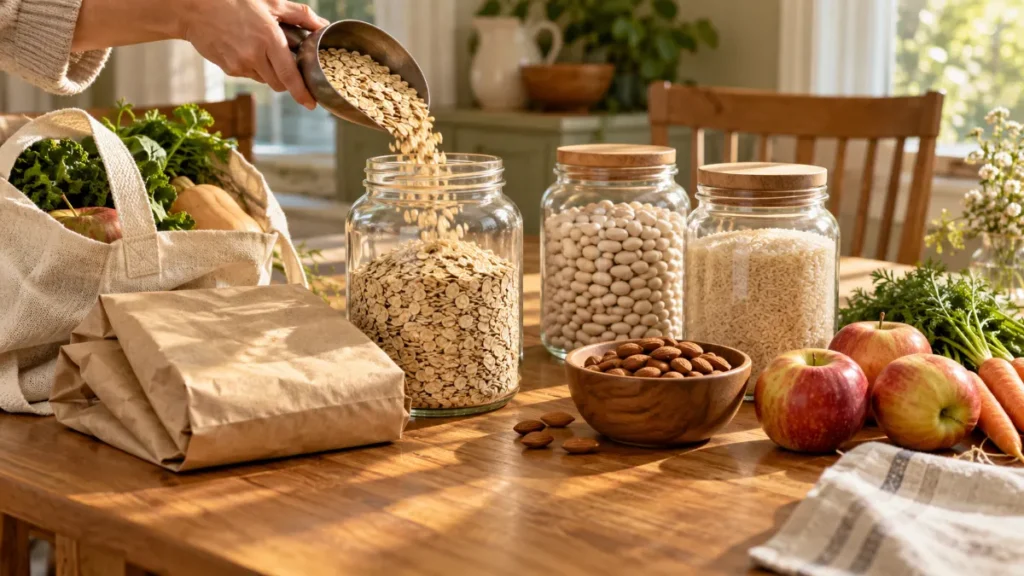
Use clean containers intended for food contact. Keep original ingredient, allergen, lot, and date information, even if transferring food into another container. For refrigerated and frozen products, follow label instructions and place them into appropriate storage promptly.
If the manufacturer recommends refrigeration after opening, include that space in your plan. Do not assume a product remains suitable for pantry storage because it arrived unrefrigerated.
Label, Rotate, and Track What You Use
Label containers with the product and relevant dates. Use older appropriate stock first, and keep a smaller working container where it makes everyday cooking easier.
A simple tracker is enough:
| Product | Quantity remaining | Date opened | Typical weekly use | Reorder trigger |
| Rolled oats | 4 lb | October 6 | 1 lb | Before remaining supply falls below ordering lead time plus a buffer |
| Dry beans | 3 lb | October 6 | 0.5 lb | Check next cutoff before buying more |
The dates and quantities are examples. Reorder using actual consumption and the next delivery opportunity. Check existing inventory before adding another bulk package to your cart.
What to Do When an Order Goes Wrong
Start with the shipment documentation, then contact the person best placed to resolve the issue. Do not wait until the next delivery to report a problem.
Check Order Records for Unavailable or Unshipped Items
Compare the original confirmation with the packing list and final charges. If an item did not ship, the official policy says you are not charged for it.
If the packing list shows it shipped, ask the coordinator to check for a missing package. If it remains missing, contact customer support with the order details. For variable-weight products, compare the billed weight with shipment information rather than assuming the estimated checkout amount is exact.
Document Missing, Incorrect, or Damaged Goods
Provide your customer number, order number, product name, affected quantity, and a clear description. Keep packaging and labels, and supply photos if requested.
The published product credit and return policy sets these important windows:
- Report damaged, defective, or spoiled goods within seven business days for consideration of a credit or refund.
- Produce quality complaints also have a seven-business-day window.
- Insect concerns have a separate seven-day window and original-packaging photo requirements.
- The policy excludes order or product issues reported after 30 days from credits or refunds.
Food purchases generally cannot be returned because you dislike the taste, develop a change of plans, or ordered something unsuitable for your sensitivities. Rare exceptions require review. Eligible non-food returns need a Return Merchandise Authorization; ask support before returning or disposing of a disputed product.
Contact customer support at 971-200-8350 or info@azurestandard.com. Ocean-freight deliveries have additional exclusions and carrier responsibilities, so buyers using those services should review the relevant terms before ordering.
Review Your First Order Before Reordering
The most useful review is based on your final invoice, collection experience, and actual product use.
Compare Expected Value With Actual Results
After pickup, record the actual charges and time spent collecting. Over the following weeks, check whether the products fit your cooking habits and storage plan.
Ask yourself:
- Was the final cost competitive with an equivalent alternative?
- Was collection reliable and manageable?
- Did the packages fit without buying unplanned equipment?
- Did everyone enjoy the foods?
- Were quantities consumed at the expected rate?
If $15 in product savings required an extra $18 trip, the purchase did not save cash. Access to a hard-to-find product might still justify it, but that is a separate benefit.
Keep What Worked and Adjust the Rest
Reorder proven products, reduce quantities that linger, and skip purchases that add more inconvenience than value. You can use the service for selected staples while continuing to buy other groceries locally.
Your next step is straightforward: find a workable drop, compare a small basket of familiar foods, and confirm storage and pickup before checking out. Let that first order guide the next one.
Frequently Asked Questions
Is there a membership fee or required ordering frequency?
There is no fee to join, and you do not need to order every cycle. Check your drop’s schedule when you want to purchase; account access does not require a recurring grocery subscription.
Do I have to buy products in bulk?
No. Many products have smaller package options as well as bulk or case sizes. Selection varies by item, so check the available quantities before ordering.
Are all products sold by Azure Standard certified organic?
No. Check each listing’s certification field and product label. A product can contain some organic ingredients without the entire product being certified organic.
Is there a minimum order, and how does it differ from a drop minimum?
There is no individual purchase minimum, but standard truck-route orders under $50 have a $5 handling fee. The standard $550 on-route drop minimum is met collectively by customers; off-route requirements can differ.
Can an order be delivered directly to my home?
Yes, many eligible products can ship through UPS or USPS. Check the delivery options and charges for your address and cart. Do not assume everything available for truck pickup is suitable for parcel shipment.
Does adding a product to my cart reserve its stock?
Do not treat a cart or advance order as guaranteed availability. Orders are picked shortly before shipping, and an item can be unavailable then. Check the packing list to confirm what actually ships.
When is payment taken for an order?
For standard card-paid drop orders, shipment determines the billable contents: unshipped items are not charged, and the final total is available after shipping. Confirm the exact charge timing for your payment arrangement; prepayment and approved credit terms work differently. Reserving funds when you submit the order avoids surprises.
Can I edit or cancel an order after checkout?
Submitted drop orders can generally be changed before the cutoff, but confirm the options shown in your account. Changes can affect pricing. After cutoff, contact support promptly; once shipped, cancellation should not be assumed available.
Can someone else collect my order for me?
Yes. The company recommends arranging collection by a friend or family member when you cannot attend. Tell the coordinator beforehand and give your collector the name on the order and packing details.
What can I do if there is no convenient drop near me?
Compare eligible parcel shipping with local alternatives. You can also ask the company about starting a drop, but route access, collective order volume, and coordination requirements must be workable. A distant pickup is worthwhile only if its full cost and schedule suit you.