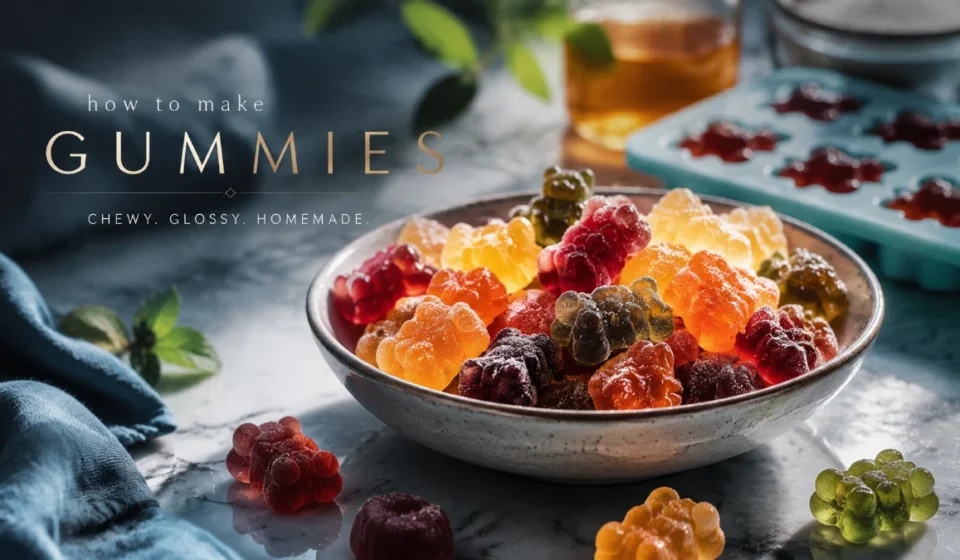

If you want to learn how to make gummies that taste and feel closer to commercial gummy candy, a basic juice-and-gelatin recipe is only the starting point. Store-bought-style gummies are usually built around a more concentrated sugar system, glucose syrup, a gelling agent, concentrated flavor, acid, and carefully controlled moisture.
The important distinction is that commercial-style texture and shelf stability are not the same thing. A gummy can become firm, chewy, and comfortable at room temperature without being proven microbiologically shelf-stable. FDA identifies water activity as an important factor in controlling microbial growth, so a home recipe should not claim a validated ambient shelf life simply because it contains sugar, glucose syrup, or citric acid.
This guide therefore focuses on getting much closer to the commercial gummy experience while keeping the storage claims honest.
What Makes Commercial Gummies Different?
A basic homemade gummy often looks like:
juice + gelatin + sweetener
A commercial-style gummy is closer to:
sugar + glucose syrup + controlled water + gelatin or another gelling system + flavor + acid + controlled drying
That difference changes the texture.
Commercial recipes can use concentrated sugar systems and controlled processing to produce a denser chew. A current Food Network gummy recipe, for example, uses powdered gelatin, sugar, corn syrup or glucose, citric acid, flavoring, and food coloring, then cooks the sugar syrup to the soft-ball stage before adding the gelatin mixture.
The exact formulation varies from product to product, but the underlying principle is useful: commercial texture comes from the whole formulation, not simply from adding more gelatin.
A Practical Commercial-Style Home Recipe
This recipe is designed to be an actionable home-scale starting point.
It is not a validated shelf-stable commercial formulation.
Ingredients
| Ingredient | Amount |
| Powdered unflavored gelatin | 60 g |
| Cold water for blooming gelatin | 150 ml |
| Granulated sugar | 160 g |
| Corn syrup or glucose syrup | 200 g |
| Citric acid | 10 g |
| Flavoring extract suitable for confectionery | 5–10 drops, or according to product strength |
| Food coloring | As needed |
| Dextrose powder, optional | For coating |
These quantities closely follow the structure of a published gummy recipe from Food Network, which specifies 60 g gelatin, 160 g sugar, 200 g corn syrup or glucose, 10 g citric acid, and flavoring. Its process cooks the sugar mixture to 234–240°F (112–116°C), then incorporates the gelatin and other ingredients.
Because gelatin strength and ingredient brands vary, treat this as a recipe framework rather than a guarantee that every batch will have identical texture.
Equipment
You will need:
- Candy or digital thermometer
- Medium saucepan
- Heat-safe bowl
- Silicone gummy molds
- Squeeze bottles or a small spouted container
- Spoon or spatula
- Tray for the molds
- Optional fine strainer
A thermometer is worthwhile for this style of gummy because the sugar syrup must reach a specific concentration range.
How to Make Gummies With a Commercial-Style Sugar Base
1. Bloom the gelatin
Combine the gelatin with the cold water.
Stir until the powder is evenly hydrated, then leave it for several minutes.
The gelatin should absorb the water and become thick.
Do not put dry gelatin directly into a vigorously boiling syrup.
2. Prepare the sugar syrup
Combine the sugar with about ¼ cup of water in the saucepan.
Heat until the sugar dissolves, then bring the syrup to a boil.
Cook it to approximately 234–240°F (112–116°C), the range specified by the Food Network formulation used as the basis for this recipe.
Use a thermometer rather than trying to estimate the temperature from appearance.
The purpose is to concentrate the sugar mixture by removing water.
3. Add the glucose or corn syrup
Remove the syrup from the heat and stir in the corn syrup or glucose syrup.
Glucose syrup contributes to the texture of concentrated sugar confectionery and helps control crystallization. Corn syrup is a common home-kitchen source of glucose syrup, but commercial glucose syrups can differ in composition, so they should not automatically be assumed identical.
4. Incorporate the gelatin
Add the bloomed gelatin to the hot sugar mixture.
Stir gently until it dissolves completely.
Avoid prolonged aggressive boiling after the gelatin has been added.
Commercial confectionery processes commonly separate the high-temperature sugar-concentration stage from the gelatin incorporation stage.
5. Add citric acid and flavor
Add the citric acid, flavoring, and optional food coloring.
Stir gently.
Citric acid provides tartness, but it should not be treated as a magic preservative. Its effect on flavor and formulation is different from the broader food-safety question of whether a finished product is shelf-stable.
6. Remove foam
Allow the mixture to settle briefly.
Skim visible foam from the surface.
You can also strain the mixture through a suitable fine strainer if the formulation allows it.
This helps produce a cleaner-looking gummy.
7. Fill the molds
Transfer the mixture carefully into silicone molds.
A squeeze bottle is particularly useful for small cavities.
Work steadily because the mixture becomes more difficult to deposit as it cools.
8. Refrigerate until set
Place the filled molds in the refrigerator for at least about 90 minutes, following the published recipe’s setting guidance.
Large or deep molds may take longer.
The gummies should hold their shape firmly before you attempt to remove them.
Why Drying Changes the Gummy
Setting and drying are different processes.
Setting is when the gel develops enough structure to hold its shape.
Drying removes moisture from the finished gummy and can change its surface and chew.
Professional-style formulations may use a separate drying stage. A 2026 Boiron confectionery guide, for example, includes a setting period followed by additional drying for a gummy preparation.
That does not mean every homemade gummy should automatically be dried for exactly 12, 24, or 72 hours.
Drying depends on:
- Gummy size
- Formula
- Humidity
- Surface area
- Initial moisture
- Desired texture
A sensible home drying approach
Once the gummies are firm enough to unmold:
- Remove them carefully.
- Place them in a single layer on parchment or a suitable rack.
- Leave space between pieces.
- Keep them in a clean, relatively dry environment.
- Check the texture periodically.
- Stop drying once the desired chew is reached.
Do not use high heat to accelerate the process unless your specific recipe calls for it.
Excessive drying can cause shrinkage, hard edges, or a tougher-than-intended center.
Drying Does Not Automatically Make Gummies Shelf-Stable
This distinction is essential.
A gummy may feel dry and firm after several hours or days, but that does not establish its microbial stability.
FDA explains that water activity measures the amount of water available for microbial growth. It is different from simply measuring total moisture.
Sugar and drying can reduce water activity, but the finished value depends on the entire formulation and process.
Therefore:
1 day of drying ≠ shelf-stable.
3 days of drying ≠ shelf-stable.
Firm at room temperature ≠ shelf-stable.
If you intend to sell or distribute gummies as an ambient-stable product, the finished formulation needs appropriate validation, including relevant food-safety controls.
How to Get the Store-Bought Chew
If your gummy tastes good but feels like Jell-O, look at the formulation rather than simply adding more gelatin.
Control the sugar concentration.
A concentrated sugar system creates a different candy structure from a diluted fruit-juice mixture.
Use glucose or corn syrup deliberately.
Glucose syrup helps modify the behavior of the sugar system and can reduce unwanted crystallization.
Match the gelatin strength
Different gelatin products have different gel strengths.
If possible, use the gelatin specified by the recipe or stay consistent with the same product when adjusting batches.
Control moisture
Too much retained water produces a softer, wetter gummy.
Too little moisture can produce excessive hardness or shrinkage.
Dry gradually
A controlled drying period can produce a firmer surface and more concentrated chew without relying on extreme heat.
Why Gummies Become Sticky Again
A gummy that was perfectly dry yesterday can become sticky in humid conditions.
The reason is simple: gummy candy contains ingredients that interact with moisture in the surrounding environment.
To reduce surface stickiness:
- Keep finished gummies away from high humidity.
- Do not package them while the surface is still wet.
- Leave space between pieces during drying.
- Use suitable packaging that limits unwanted moisture exchange.
- Avoid storing them in a warm, humid room.
If the recipe is not validated for ambient storage, refrigeration remains the conservative option.
How to Make Sour Store-Bought-Style Gummies
Sour gummies usually need acidity both for flavor and for the characteristic sharp finish.
A simple coating can combine:
- Granulated sugar
- Citric acid
Mix the coating separately and apply it after the gummy surface is sufficiently dry.
If you coat too early, moisture from the gummy can dissolve the sugar and acid.
If the coating is painfully sour, reduce the citric acid rather than simply adding more sugar afterward.
For a commercial-style appearance, an even coating is more important than making the acid concentration extreme.
What About Real Fruit Juice?
You can use real fruit juice, but it changes the formulation.
The commercial-style recipe above has been designed around a controlled amount of water, sugar, glucose syrup, and concentrated flavor.
Adding juice introduces:
- Additional water
- Natural sugars
- Acids
- Fruit solids
- Variable flavor concentration
That means you cannot simply replace the water with an equal amount of juice and assume the same texture.
If real fruit is the priority, build a separate recipe around the juice or puree.
Can You Make These Gummies Vegan?
The recipe above uses gelatin, so it is not vegan.
A vegan commercial-style gummy requires a different gelling system, such as pectin or another suitable hydrocolloid.
Pectin is particularly formulation-sensitive. High-methoxyl pectin generally relies on sugar and acid, while low-methoxyl pectin can use calcium to create the gel.
Do not replace the 60 g gelatin in this recipe with 60 g pectin.
That would be a completely different formulation.
Troubleshooting Commercial-Style Gummies
| Problem | Likely cause | Better response |
| Too soft | Too much retained water or insufficient gel strength | Review syrup concentration and gelatin formulation |
| Too hard | Excess concentration or excessive drying | Shorten drying or adjust the formula |
| Sticky surface | Humidity or residual moisture | Dry more gradually and reduce humidity |
| White crystals | Sugar crystallization | Review sugar/glucose balance and processing |
| Gummies shrink | Excess moisture loss | Reduce drying intensity/time |
| Flavor is weak | Sugar base can mute flavor perception | Use an appropriate concentrated food flavor |
| Cloudy appearance | Foam or trapped air | Mix gently and skim/strain |
| Sour coating turns wet | Surface still contains moisture | Dry further before coating |
| Gummies set like Jell-O | Too much water or insufficient confectionery solids | Rework the formulation rather than simply adding gelatin |
How Commercial Gummy Production Differs From Home Candy Making
A commercial manufacturer can control variables that are difficult to reproduce in an ordinary kitchen.
These can include:
- Gelatin Bloom strength
- Sugar concentration
- Glucose-syrup composition
- Cooking temperature
- Final moisture
- Water activity
- Acidity
- Depositing conditions
- Cooling
- Drying
- Packaging
This is why two recipes containing the same basic ingredients can produce very different gummies.
The ingredient list is only part of the process.
Read more: How to Make Gummies Like Store-Bought Candy
How to Make Gummies With a More Professional Finish
If appearance matters as much as texture, pay attention to the small details.
Use consistent molds
Different cavity sizes dry at different rates.
Avoid excessive bubbles
Aggressive mixing creates foam that can become trapped inside the finished candy.
Skim before depositing
Removing surface foam improves clarity.
Fill evenly
Uneven gummy sizes create inconsistent texture.
Allow enough drying tim.e
Do not package the gummies immediately after unmolding if the surface is still wet.
Keep the finished candy dry
Humidity can undo some of the texture improvements achieved during drying.
Frequently Asked Questions
How to make gummies taste more like store-bought candy?
Use a concentrated sugar-and-glucose-syrup formulation rather than relying entirely on fruit juice. Add concentrated food flavor and controlled acidity, then allow the finished gummies to set and dry appropriately.
Does corn syrup make gummies shelf-stable?
No. Corn syrup can influence texture and crystallization, but it does not by itself establish shelf stability. Water activity, formulation, processing, packaging, and other controls matter.
Do I need a candy thermometer?
For a commercial-style sugar-syrup gummy, a thermometer is strongly recommended because syrup concentration depends on temperature. A basic juice-and-gelatin gummy does not require one.
Why are my gummies too soft?
Possible causes include excess water, insufficient gelatin strength, an under-concentrated sugar phase, or insufficient drying. Check the entire formulation before simply adding more gelatin.
How long should I dry homemade gummies?
There is no universal drying time. Some professional formulations use separate setting and drying periods, but the correct duration depends on the recipe, gummy size, humidity, and desired texture.
Does citric acid preserve gummies?
Citric acid contributes acidity and sour flavor, but it should not be treated as a guarantee of preservation. Shelf stability requires appropriate control of the finished product.
Can I replace corn syrup with honey?
You can experiment with honey, but it is not an equivalent substitution. Honey has a different composition and moisture profile and can change flavor, texture, and crystallization behavior.
Can I use fruit juice in a commercial-style gummy?
Yes, but juice changes the water and sugar balance. It should replace part of the formulation deliberately rather than being added on top of an existing recipe.
Why are my sour gummies turning wet?
The surface may still contain too much moisture, or humidity may be drawing moisture into the sugar-acid coating. Dry the gummies sufficiently before coating and store them in a dry environment.
Can I sell these gummies as shelf-stable candy?
Do not assume that a home recipe is commercially shelf-stable simply because it remains firm outside the refrigerator. Selling an ambient-stable food can require formulation validation, water-activity or other process controls, compliant packaging, labeling, and applicable local regulations. FDA food-safety guidance demonstrates why measurable product characteristics matter when water activity is being used as a preservation control.
Final Takeaway
The best way to learn how to make gummies that resemble commercial candy is to control the entire formulation rather than chasing one secret ingredient.
A sugar-and-glucose-syrup base, appropriate gelatin strength, concentrated flavor, carefully measured acidity, controlled cooking, accurate molding, and gradual drying can move a homemade gummy much closer to commercial confectionery.
But there is an important boundary: commercial-style texture does not automatically mean commercial shelf stability. If you want to sell or store gummies at room temperature for extended periods, the finished product needs appropriate food-safety validation.
For home candy making, focus first on the texture you can see and taste. Control the sugar system, moisture, gelatin, acidity, and drying process, and your gummies can become dramatically more convincing without making unsupported shelf-life claims.