
A side eye, for those who are confused, is the sideways glance of skepticism that suggests disapproval or discomfort and sometimes disbelief without necessarily being critical. Think of it as the Verbal translation for, “Really? or, “That isn’t working out.
This is a general term for several reaction styles including in different formats: Side Eyeing Chloe, Teddy, Animal Photosand the individual bombastic side eye audio trend. Your context, however, is everything: are you arguing against an excuse, playfully tearing apart a friend or giving a big finish to viewers? If you are not familiar with the format, refer to this guide and be assisted by reaction.
Find the Side Eye Meme You’re Looking For
Different expressions produce different jokes. A confused-looking face can make an excuse seem unbelievable, while an animal reaction can make the same judgment feel playful. Start by identifying the version you have in mind.
Side Eyeing Chloe
Chloe a worried looking prepubescent girl in a car seat turns her head sideways. This photograph is a frame from the family video Lily’s Disneyland Surprise… AGAIN! And by 2013 it had grown to be one of the most ubiquitous reaction formats. This look A is also the perfect for any caption which doesn’t end up sounding too whacked out all of sudden or sort of shady
When you have a dress code for a casual dinner.
The caption is a reason to be sceptical; the face — for us — a response. You rely on reader to have seen original video for joke
You click on the photo that has someone tagged (a.k.a. Chloe reference) and type search template collection of some variation of “Side Eye Chloe”.
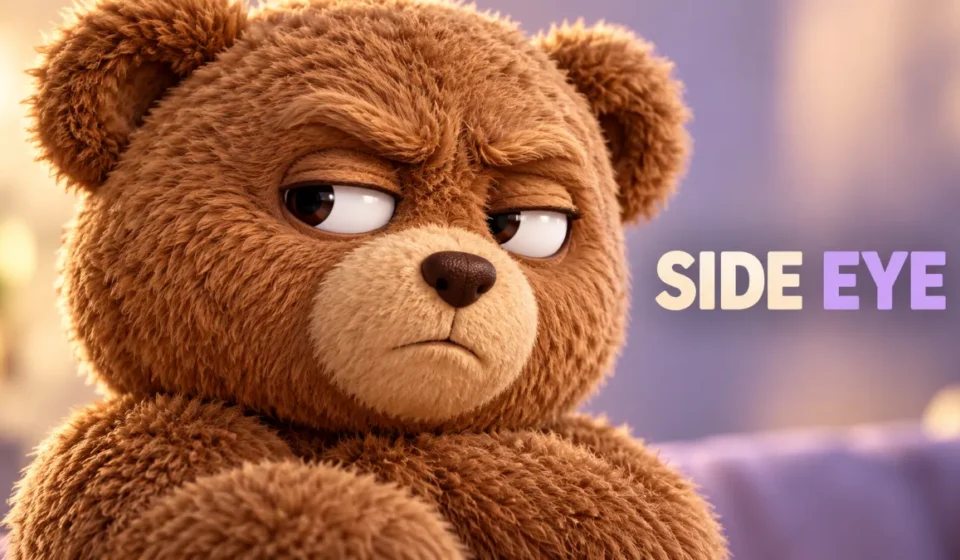
Side Eye Teddy
Template source: Imgflip.
This version features a brown teddy bear with its head turned and eyes looking sideways. Its expression can make an ordinary contradiction feel suspicious:
“When the person who ‘doesn’t like sweets’ asks for half your brownie.”
Open the Side Eye Teddy generator to add your caption. Imgflip provides text editing and image-generation controls directly on the template page. Cat and Dog Side Eye Reactions
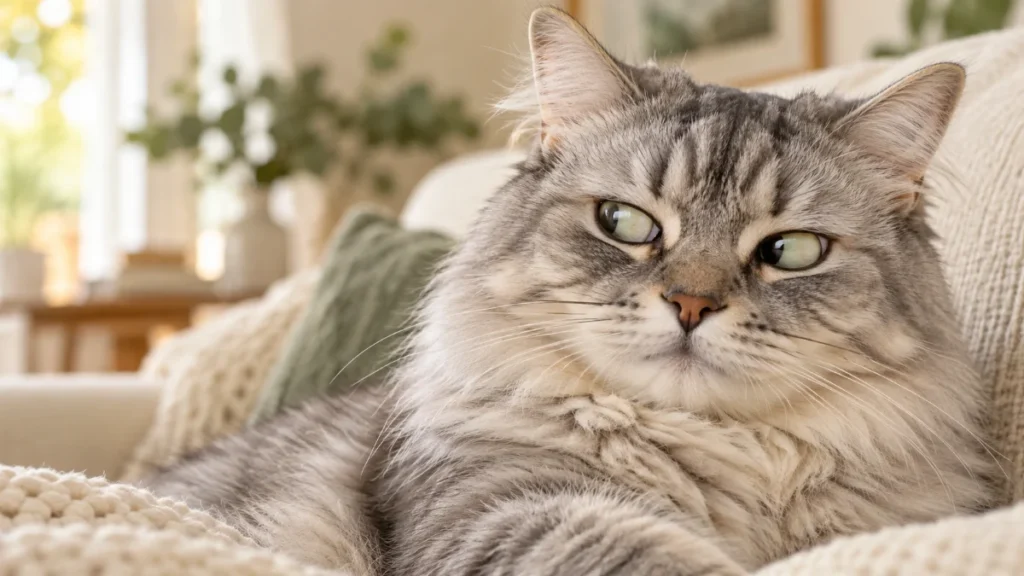
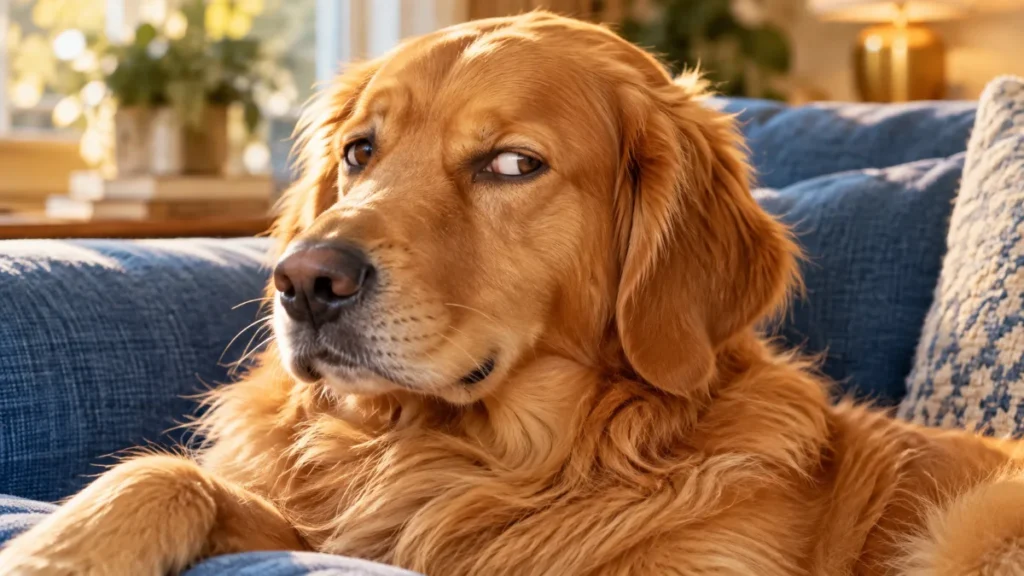
Animal reactions are a category rather than one image with a single origin. A close-up of a cat looking sideways and a dog turning toward the camera may both work, but their expressions and framing differ.
Food and household situations are easy matches:
“When they open the snack cabinet and say it’s not for you.”
Or:
“When your roommate announces another ‘small’ furniture purchase.”
The humor comes from assigning a human interpretation to the image. A pet’s sideways glance alone does not establish that it feels judgmental, guilty, or annoyed.
Browse the side-eye template collection, or use a clear photo of your own pet.
Read more: Side Eye Meme
Bombastic Side Eye Audio
“Bombastic side eye” turns understated judgment into a spoken, exaggerated reaction. Instead of letting a still image do all the work, the delivery becomes part of the punchline.
For example, a short video might show someone describing an expensive impulse purchase as “saving money.” The on-screen caption establishes the contradiction, and the audio responds to it.
This is a separate format from Chloe’s image. The spoken side-eye trend and its bombastic variation spread on TikTok in 2023. You can hear examples through the What Does a Side Eye Meme Mean?
The basic message is that something deserves a questioning look. The caption and conversation determine whether that look communicates doubt, annoyance, or friendly teasing.
A friend’s exaggerated excuse may deserve a playful reaction. The same image under a serious question can feel dismissive.
Skepticism, Disapproval, and Awkward Disbelief
Skepticism questions whether a statement is believable. Think of a friend texting “almost there” while still choosing an outfit.
Disapproval suggests that a behavior deserves judgment. Someone announces they are too full for dessert, then takes the largest piece of yours.
Awkward disbelief reacts to something unexpectedly strange. A group chat proposes a 6 a.m. departure for a trip everyone described as relaxing.
These interpretations overlap. The image does not need to communicate an exact emotion on its own, provided the setup makes the intended reaction clear.
Side Eye vs. Eye Roll vs. Suspicious Stare
These are useful distinctions for choosing a reaction, rather than fixed rules about facial expressions.
| Reaction | Typical implied message | Best fit |
| Side eye | “That sounds questionable.” | Doubt or understated judgment |
| Eye roll | “Here we go again.” | Repeated annoyance |
| Suspicious stare | “What are you hiding?” | More direct scrutiny |
If the joke concerns a questionable excuse, a sideways glance may fit. If it concerns an annoying habit happening for the tenth time, an eye roll may communicate the setup faster.
Choose the Right Reaction: A Situation-to-Template Guide
A useful reaction matches three things: the situation, the strength of the judgment, and the person receiving it. Template popularity matters less than whether the joke lands.
Match the Reaction to the Situation
Use this table as a starting point, not a rulebook.
| Situation | Suggested format | Caption approach |
| An unbelievable excuse | Chloe-style image | Quote or summarize the excuse |
| A harmless contradiction | Teddy or animal image | Show the mismatch between words and actions |
| A slowly developing reaction | GIF | Keep the accompanying text brief |
| An exaggerated video punchline | Side-eye audio | Establish the setup before the sound |
| A quick reply to a clear message | Uncaptioned reaction image | Let the preceding message provide context |
An uncaptioned image can work perfectly in a chat because the previous message is the setup. On a standalone social post, readers usually need that setup included.
Match the Tone to the Recipient
A close friend may understand that you are teasing their habit of arriving late. A new coworker may read the same image as criticism.
Compare these situations:
- A friend says, “I’m packing light,” beside three suitcases. A playful reaction fits the visible contradiction.
- Someone asks, “Can you explain this assignment?” A judgmental image may make them feel embarrassed for asking.
Aim the joke at a recognizable situation or behavior. Avoid making someone’s appearance the punchline, and use words when a conversation needs a real answer.
Test Whether the Joke Works Without Explanation
Before sharing, check:
- Can readers identify what is being questioned?
- Does the expression fit the setup?
- Is enough context included for someone outside the conversation?
- Is the caption readable on a phone?
- Will the recipient recognize the teasing tone?
If a caption needs a paragraph of explanation, make the setup more specific. “When they do that thing again” is an inside reference. “When they mute the group chat but ask what the plan is” gives readers something concrete.
Side Eye Meme Caption Ideas—and Why They Work
The best captions establish one recognizable mismatch. You do not need to describe the expression or announce that the situation is funny.
Friendship and Group Chat Captions
“When they say ‘five minutes away’ but haven’t left home.”
The claimed arrival time conflicts with what you know. The expression becomes a silent fact-check.
“When your friend says they hate drama and sends twelve screenshots.”
The joke depends on contradictory behavior, making it understandable without naming anyone.
“When they borrow your charger and start calling it theirs.”
This turns a small, familiar irritation into playful judgment. It works best with someone who understands the teasing context.
Work and School Captions
“When the ‘quick meeting’ gets a second agenda.”
The phrase “quick meeting” establishes an expectation; the second agenda breaks it.
“When the group project has five names and one contributor.”
The contrast communicates the problem immediately. No explanation of the class or assignment is necessary.
“When the deadline reminder arrives before the instructions.”
This targets an awkward process rather than a particular person, making it easier to understand across different workplaces and schools.
Food, Shopping, and Everyday Captions
“When someone says they aren’t hungry and reaches for your fries.”
A clear contradiction makes this suitable for a teddy bear or animal reaction.
“Me hearing ‘just one episode’ at midnight.”
The viewer supplies the familiar ending: one episode may become several.
“When free shipping requires another $40.”
Here, the reaction questions whether the supposed saving is worth the extra spending.
| Caption setup | What the expression adds | Implied response |
| A friend has not left home | Doubt | “Five minutes? Really?” |
| Someone reaches for your fries | Playful disapproval | “I thought you weren’t hungry.” |
| Free shipping requires more purchases | Skepticism | “How much am I actually saving?” |
How to Make a Side Eye Meme
You need a clear image and a readable setup. Elaborate effects rarely improve a joke whose main feature is a facial expression.
Choose a Blank Template or Your Own Photo
Start with an established template if recognition helps the joke. Use your own photo when the situation involves a specific pet, object, or moment.
For Teddy, open the Imgflip template. Its workflow lets you select an image, add customizations, and generate a result for saving or sharing. Choose a source where the eyes are clearly visible. Avoid screenshots containing someone else’s caption, browser controls, or large borders unless those elements are intentional.
Write One Clear Setup
A reliable formula is:
Specific claim or behavior + obvious contradiction.
| Weak caption | Improved caption |
| “When someone acts suspicious” | “When your roommate denies eating it—with your spoon in their hand” |
| “When shopping is annoying” | “When the discount disappears at checkout” |
| “When your friend is late” | “When ‘parking now’ means they just found their keys” |
The improved versions give readers a reason for the reaction. Let the expression deliver the judgment instead of adding “and I’m suspicious” to the caption.
Keep the Face Visible and the Text Readable
Place text above or below the face when possible. Covering the eyes removes the detail that makes the format work.
Use a readable font, strong contrast, and enough spacing between lines. White text with a dark outline can work on a busy image; a separate caption area may be clearer when the background is complicated.
Preview at phone size. If you must zoom in to read the setup, shorten it or increase the text size.
Save and Check Before Sharing
After generating the image:
- Open the saved result.
- Check that the complete caption appears.
- Confirm that the eyes and face are not cropped.
- Read it at normal phone size.
- Add the caption as nearby text or appropriate alt text when publishing.
Choose a still image when one expression carries the joke. Use a GIF when the movement matters. If spoken delivery is essential, share a video or audio-supported post rather than expecting a silent GIF to reproduce it.
Where Did Side Eye Memes Come From?
There is no single origin story for every sideways-looking reaction. Individual images and sounds have their own documented histories.
Chloe’s 2013 Disneyland Reaction
Know Your Meme dates the upload of Lily’s Disneyland Surprise… AGAIN! to September 12, 2013. In the video, Lily and Chloe learn about a surprise Disneyland trip while heading to school. Lily becomes emotional, while Chloe’s contrasting expression supplies the memorable reaction image.
The reference documents subsequent Tumblr GIF sets, reaction-image captions, and edits placing Chloe’s face into other pictures. That history explains the image’s spread; it does not establish Chloe as the origin of every side-eye format.
The Separate 2023 Audio Trend
Know Your Meme distinguishes a January 2023 spoken side-eye clip associated with Cynthia Mmasi from a later “bombastic” variation. It documents a January 22 post by @lmfaomal using the expanded catchphrase, followed by remixes.
Some early posts were deleted, so surviving reposts and archived descriptions matter when tracing attribution.
| Format | Documented milestone | Reference |
| Chloe reaction | Family video uploaded September 12, 2013 | Chloe history |
| Spoken side-eye trend | Circulation documented in January 2023 | Audio history |
| Bombastic variation | January 22, 2023 post documented | Audio history |
Common Mistakes That Weaken the Joke
An unclear target: “When this happens” gives unfamiliar readers no setup. Name the behavior.
An overlong caption: Multiple sentences can bury the contradiction. Keep the information that makes the expression meaningful.
A mismatched reaction: A bewildered face may weaken a joke intended to communicate repeated annoyance. Choose the image after deciding what you want to express.
Text covering the eyes: Move the caption rather than sacrificing the central visual detail.
Missing context: Replace vague references such as “that thing yesterday” with a recognizable event.
Poor conversational timing: A humorous image may be unhelpful when someone is asking for clarification or discussing a genuine concern.
For example, change “When the delivery situation is weird” to “When the tracking says ‘delivered’ and your porch disagrees.” The revised setup gives the reaction a clear target.
Frequently Asked Questions
Who is the girl in the side eye meme?
She is Chloe Clem. Her recognizable expression comes from a 2013 family video about a surprise Disneyland trip with her sister, Lily.
Is there one original side eye meme?
There is no single origin established here for the entire category. Chloe’s image and the TikTok audio have separate documented histories, while other reaction images come from different sources.
What is the Side Eye Teddy template?
It is the brown teddy bear reaction image shown above. The Imgflip template page lets you add your own caption.
What does “bombastic side eye” mean?
It is an exaggerated, humorous expression of judgment or disbelief. The spoken delivery makes the reaction more theatrical than an understated sideways glance.
Is sending a side eye meme rude?
It can be. Friendly teasing may work between people who share the context, while the same image can feel dismissive in response to a sincere question.
Where can I find a blank side eye template?
Use the Teddy generator linked above or browse Imgflip’s side-eye collection. Check that the selected image has no unwanted caption before editing.
How do I save a side eye meme on my phone?
Use the generator’s download option when available. For an image displayed in a browser, press and hold to look for a save option. Social apps may provide different controls.
Should I use a still image, GIF, or audio clip?
Use a still image for a single clear expression, a GIF for movement, and an audio-supported video when spoken timing or emphasis delivers the punchline.
Why is my meme blurry after I share it?
A small source image, repeated screenshots, enlargement, or sharing-platform compression can reduce clarity. Start with a clear source and avoid unnecessary resizing.
How do I describe a side eye meme with alt text?
Describe the visible expression and include essential caption text. For example: “Brown teddy bear glancing sideways. Caption: ‘When the discount disappears at checkout.’”